

ROCO 6210098 RE control cab coach, type Bpmbdzf 286.3, of the Deutsche Bahn.
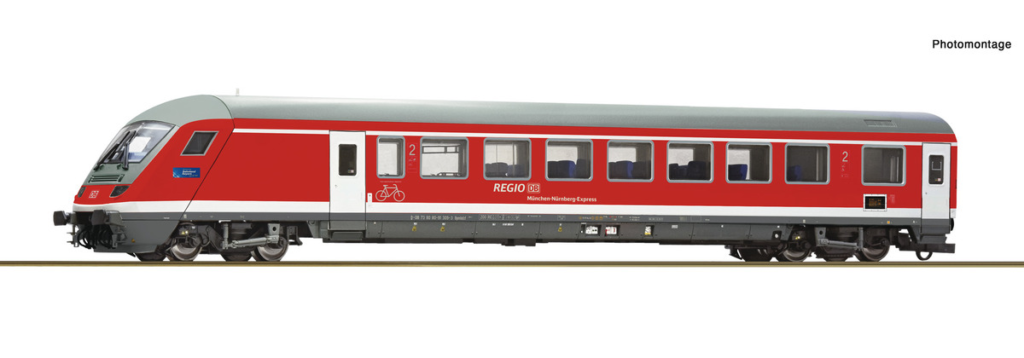
Mold variant!
■ For the first time with pressure-tight carriage transition
■ Interior adapted to the prototype
■ Munich-Nuremberg Express livery
■ Prototypical without WLAN antennas
■ Free-standing replica of the bicycle stands
■ Elaborate, multi-coloured interior design
■ In digital operation with switchable high beam and illuminated driver’s cab/control panel
■ DC version
ROCO 6210156 IC control cab coach, type Bpmbdzf 296.3, of the Deutsche Bahn.
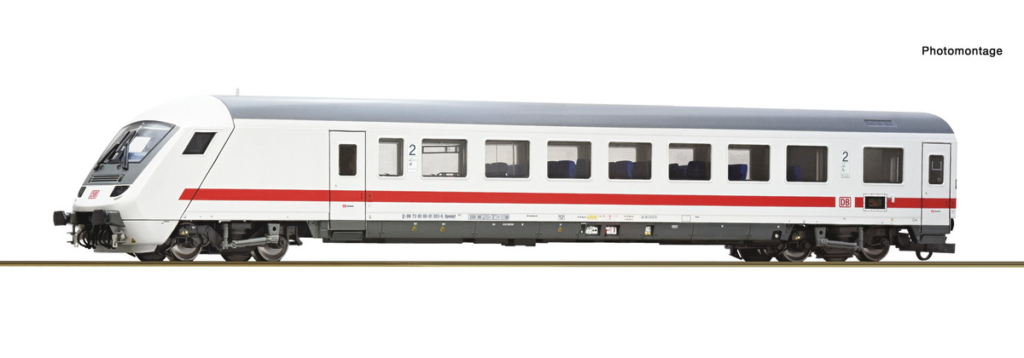
Mold variant!
■ For the first time with pressure-tight coach transition
■ Version after the first redesign from 2002
■ Prototypical without WLAN antennas
■ Free-standing replica of the bicycle stands
■ Elaborate, multi-coloured interior design
■ In digital operation with switchable high beam, driver’s cab and control panel illumination
DB began developing control cab coaches for long-distance transport in the early 1990s. The first 75 control cab coaches were created from converting coaches out of the Halberstadt production.
After the delivery of the first two series, PFA Weiden began the production of twelve pressure-tight IC control cab coaches.These coaches were designated Bpmbdzf 297.3 to distinguish them from the “standard” version. After the first redesign in 2002/2003, the type number was changed from 297.3 to 296.3. The vehicles were fitted with a passenger information system and digital train destination displays on the outside.
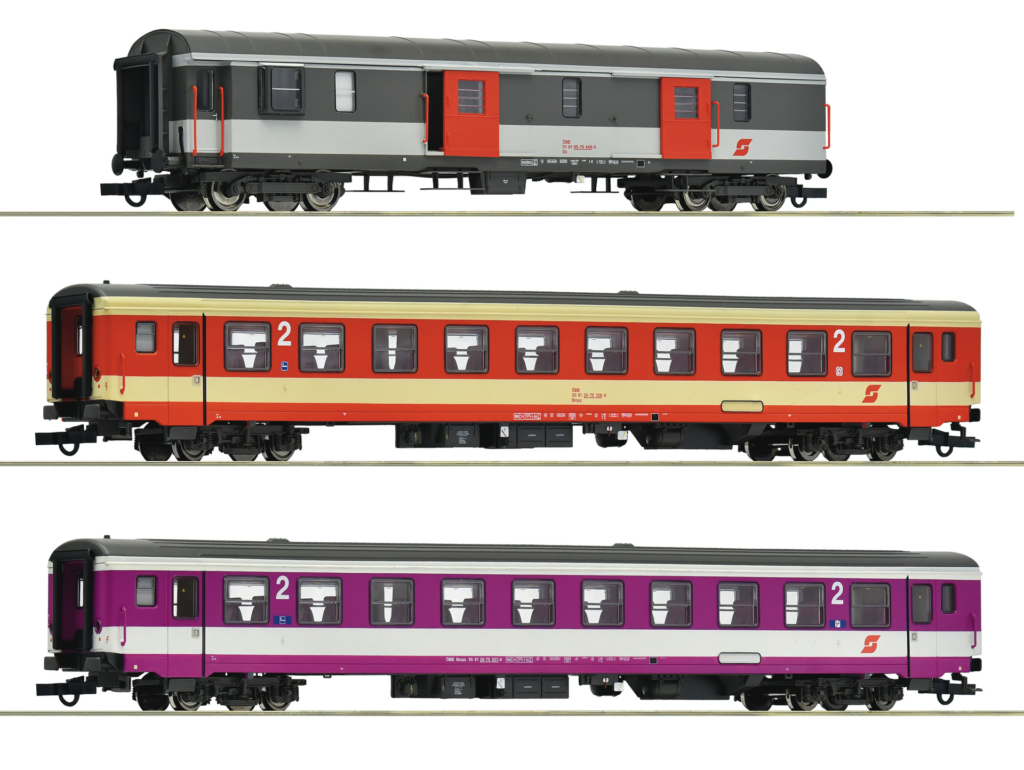
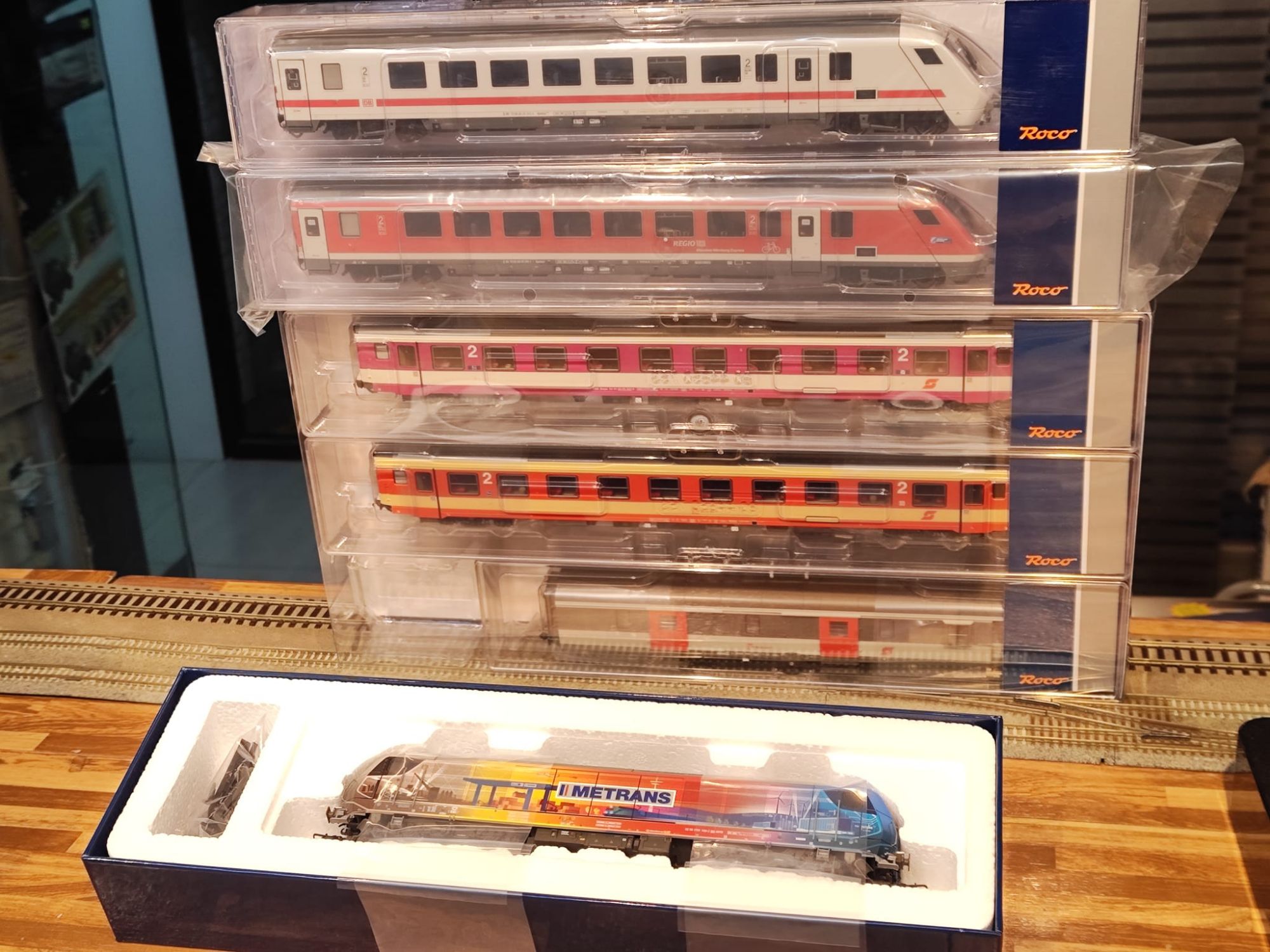
ROCO 6200127 3 piece set (1): Express train “D 704”, ÖBB
The set contains two 2nd class domestic coaches, type Bmpz and a luggage wagon, type Ds.
■ Operated as D 704 from Vienna Westbf to Bischofshofen
■ Operation condition around 1992/93
In June 1991, the Austrian Federal Railways (ÖBB) implemented the “New Austro-Takt 91” as part of a significant timetable change. This initiative was the first phase in creating a coordinated public transport network across Austria. It was the most considerable timetable adjustment in ÖBB’s history, leading to a noticeable increase in the number of trains and services on many routes.
The D 704/705 was an express train that operated from Vienna Westbahnhof, passing through Amstetten and Selzthal on its way to Bischofshofen. This service ran only on specific days, such as weekends and holidays, and was introduced with the “NAT 91” timetable. Unlike most trains, it took an alternative route through the Gesäuse and the Enns Valley, bypassing Salzburg. Although this route was shorter in distance, it did not offer a faster travel time due to the lower quality of the track and a higher number of stops. Under the “NAT 91”, the train took five hours and eight minutes to complete its journey. In contrast, the direct InterCity (IC) trains that operated every two hours via Salzburg could make the trip to Bischofshofen in just four hours and eleven minutes. Rather than serving solely as a direct connection between Vienna and Bischofshofen, this train primarily functioned as a service to various tourist destinations in the Enns Valley. Notably, the train used a variety of rolling stock and traction units, depending on what was available and not lacking for the day.
ROCO 7310049 Diesel locomotive 761 102-3, Metrans DCC SOUND
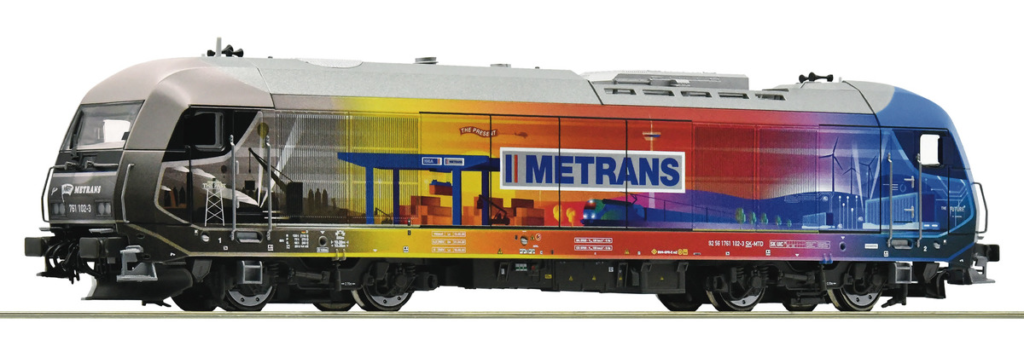
■ Model exclusively available at ROCO
■ Elaborate anniversary design
■ Exterior mirrors enclosed to portray folded and unfolded positions
■ Separately attached handle rails, windscreen wipers and UIC sockets
■ Brake discs in contrasting colours
■ With switchable high beam and individually switchable headlight or tail light in digital mode
■ In cooperation with Railcolor Design
The 761 102 Metrans was provided with a striking advertising design in the year 2023 to suit the slogan “Past, present, future”. The grey front end represents the past, the yellow and red side the present and the other, blue front end the future. Attentive observers will notice that the original company logo which can still be seen on the other Metrans Hercules has been featured on the grey front end representing the past, whereas the blue front end representing the future bears the new logo.